ANT CONTROL CAIRNS
Practical ant treatment for Cairns homes, rental properties and businesses.

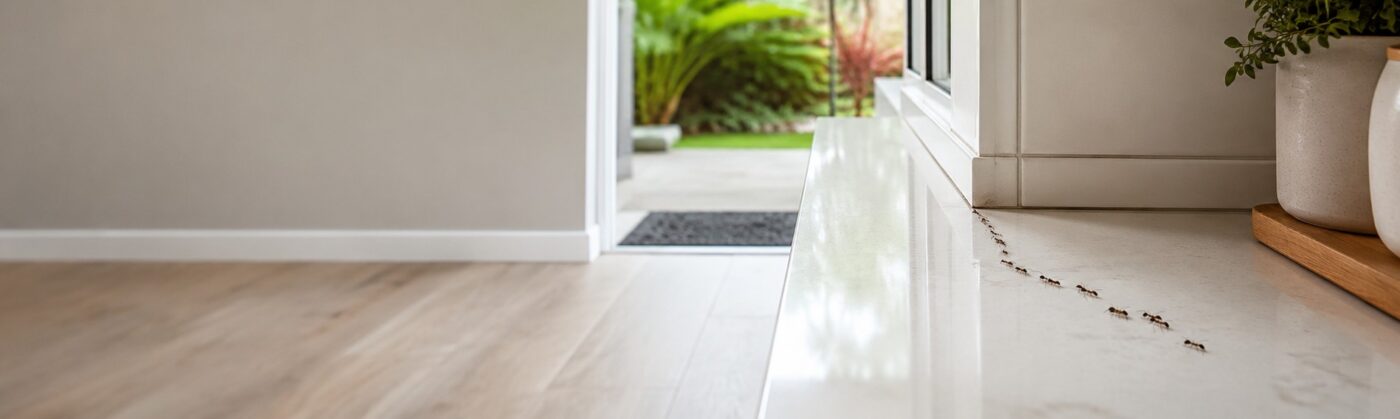
Ant activity is a common pest issue around Cairns homes, rental properties and businesses. It may be noticed indoors around kitchens, bathrooms, laundries, bins, pet feeding areas and food storage areas, or outdoors around patios, paving, garden beds, wall edges, paths and building surrounds.
Problems can range from a small number trailing indoors to more persistent activity where nesting is occurring close to the building, or where regular access to food, moisture or shelter is available. Entry may occur through small gaps around doors, windows, pipes, weep holes, wall junctions, cabinetry, skirting boards or other openings around the building.
Because behaviour can vary depending on the species, nesting location and food preference, treatment is not always a one-size-fits-all process. Supermarket sprays may kill the visible insects, but they often do not address the nest or colony. With some species, such as Pharaoh ants, repellent sprays may cause the colony to split, a behaviour known as budding. This can increase the number of nesting sites and make the problem harder to manage.
Pestco Pest Management considers where the activity is occurring, what the ants are feeding on, likely entry points, possible nesting areas and whether the issue is mainly indoors, outdoors or both. This helps determine a more suitable treatment approach than simply spraying what is visible at the time.
Request Ant Control VIEW GENERAL PEST CONTROL PRICESThere are many ant species found around Cairns properties, and not every ant seen indoors is the same. Correct identification can be important because treatment may vary depending on the ant species, nesting location, food preference and pattern of activity.
Ants commonly encountered around homes, rental properties and businesses may include coastal brown ants, ghost ants, Pharaoh ants, black house ants and white-footed house ants. Larger ants such as green ants and carpenter ants may also be noticed around buildings and gardens, although they are not usually treated in the same way as small indoor trailing ants.
Image note: The ant images below are AI-assisted digital reference images intended as a general visual guide only. They may not show every anatomical detail with scientific accuracy, so detailed species-level identification may require professional assessment or entomological reference material.
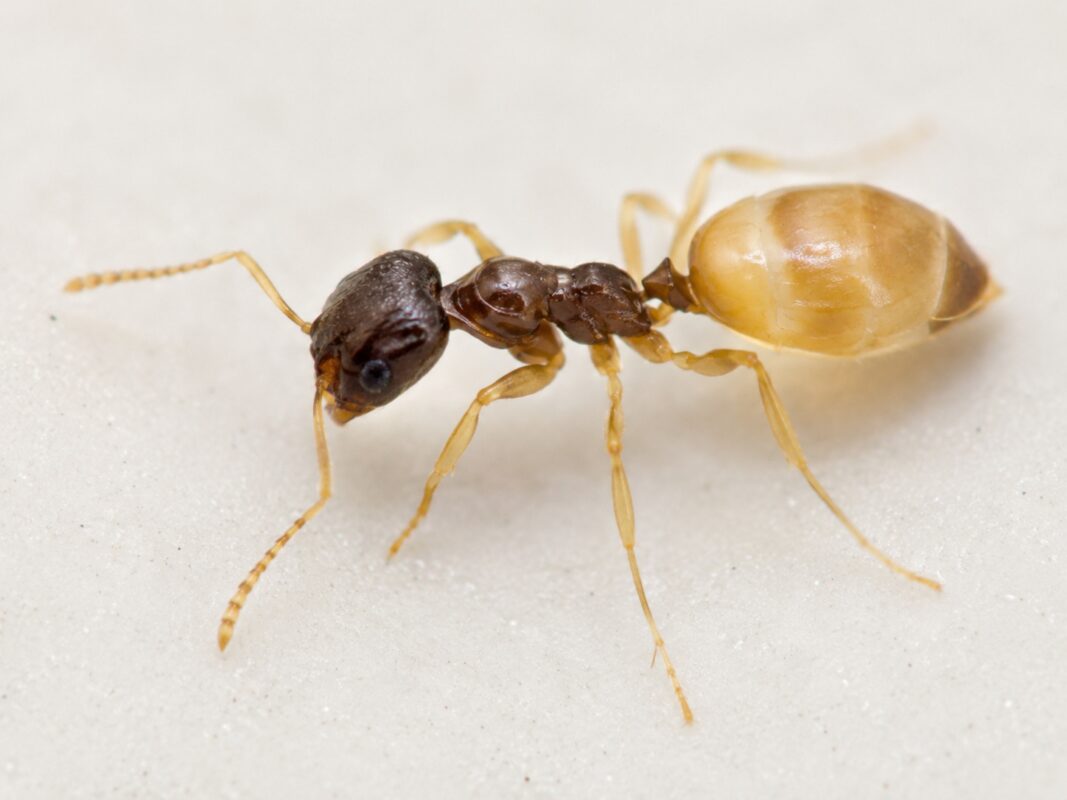
Ghost ants are very small ants, usually around 1.3 to 2 mm long. They can be difficult to see clearly because their legs and rear body are pale or almost translucent, while the head and front section of the body are darker. This can help distinguish them from Pharaoh ants discussed below, which are usually more uniform yellow, reddish-yellow or light brown in colour.
They are often noticed trailing around kitchens, bathrooms, laundries, cupboards, benches, sinks, wall edges and other areas where sweet foods, food residues or moisture are available. They favour sweet foods, but may also feed on grease, insects and other food residues. Their pale colouring can make trails harder to see until activity becomes more established, and they may move quickly and erratically, particularly when disturbed.
Nesting may occur in concealed or sheltered areas, including wall cavities, behind skirting boards, behind fittings, around cabinets, pot plants, roof areas, stored items or external vegetation close to the building. Ghost ants may move between indoor and outdoor areas depending on food, moisture and nesting conditions.
Compared with Pharaoh ants, ghost ants are often more strongly associated with moisture areas and may be found moving between indoor and outdoor nesting sites. Trails may lead to sinks, bathrooms, laundries, kitchens or other areas where moisture and food sources are available.
Correct identification is useful because ghost ants may move between indoor and outdoor nesting areas and are often linked with food and moisture sources.
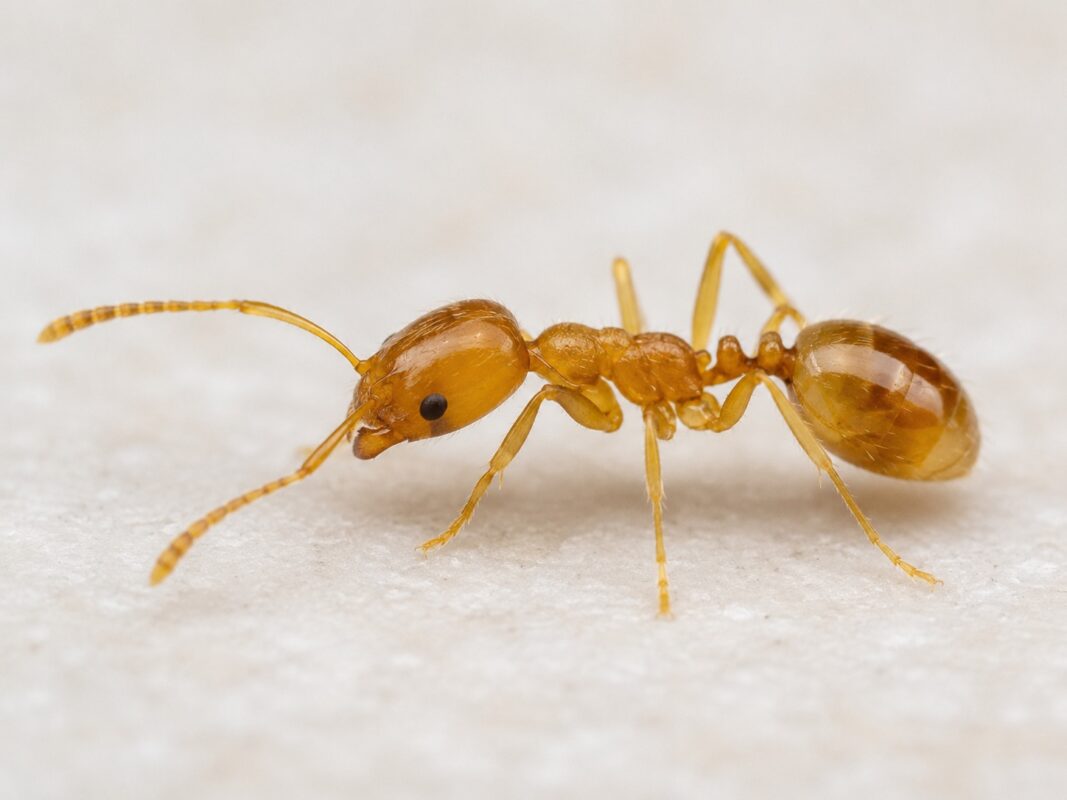
Pharaoh ants are very small ants, usually around 1.5 to 2 mm long. They are generally uniform in colour and may appear yellow, reddish-yellow or light brown, which can help distinguish them from ghost ants discussed above, which have a darker head and pale, almost translucent legs and rear body.
They can become persistent indoor pests where food, warmth and sheltered nesting areas are available. Activity may be noticed around kitchens, cupboards, benches, bathrooms, laundries, wall edges, food storage areas, appliances and commercial food-handling areas. Pharaoh ants can feed on a range of food sources, including proteins, fats, oils, sweet foods and food residues.
Unlike ghost ants, which are often strongly associated with moisture areas, Pharaoh ants are more commonly linked with warm, protected indoor nesting sites. Nesting may occur within wall cavities, cupboards, behind fittings, around appliances, electrical areas, roof areas or other sheltered parts of a building.
Activity may appear scattered at times, particularly where ants are moving between hidden nesting sites and different food or moisture sources. In larger buildings, ants may appear in several areas because nesting can occur in concealed spaces.
Pharaoh ants can be difficult to manage with DIY treatments because colonies may spread or relocate if disturbed incorrectly. Domestic ant sprays should generally be avoided, as many are repellent products and may cause the ants to split the colony, a behaviour known as budding. This can increase nesting sites and make the problem harder to manage. Where DIY control is attempted, a suitable ant bait is generally a better option than repellent sprays, provided the ants are actively accepting the bait.
Correct identification is especially important with Pharaoh ants because some treatment approaches can cause colonies to spread into additional nesting sites.
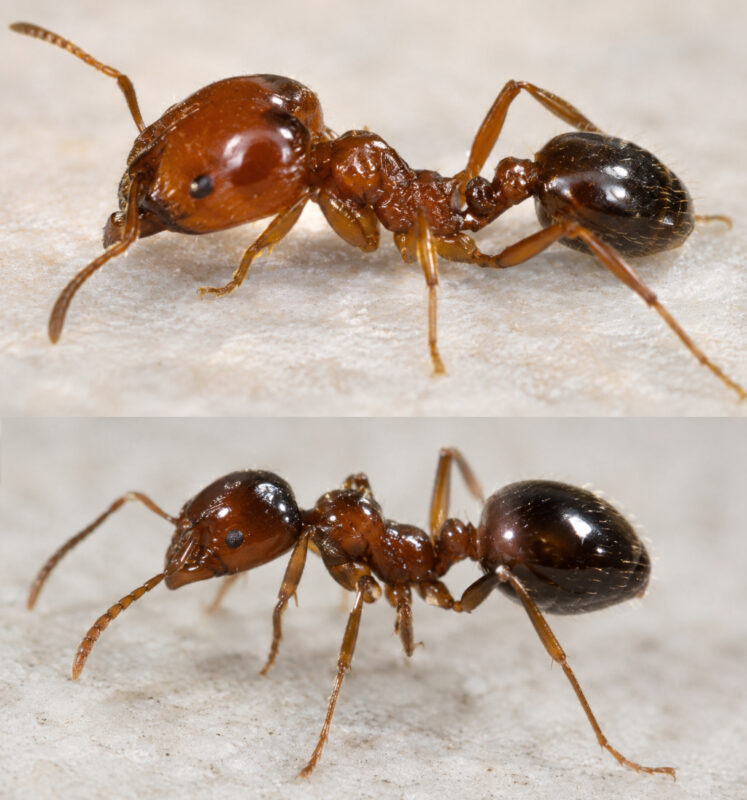
Coastal brown ants, also known as big-headed ants, are small golden-brown to brown ants. The smaller workers are usually around 1.5 to 2.5 mm long, while the less common larger major workers may reach about 4 to 4.5 mm and have noticeably enlarged heads.
Often regarded as a nuisance ant around buildings, this species is also recognised as a significant invasive ant species. Colonies can form large interconnected nesting areas and may become persistent around the property, including inside homes and other buildings.
Outdoor nesting commonly occurs in soil, lawns, garden beds, paver joints, paths, pot plants and building surrounds. Activity may appear as small mounds of excavated soil, loose gritty material or lines of small holes around lawn edges, paving and garden areas. Nesting may also occur within wall cavities, roof cavities, behind skirting boards or other sheltered areas of buildings.
Around buildings, these ants may trail along paths, wall edges, paving, patios, skirting boards, window sills or entry points. Small piles of gritty debris that resemble dirt may also appear around skirting boards, window sills, door frames or floor edges. This material often consists of dead ants, body fragments and nesting debris being pushed out from concealed nesting areas. If it keeps reappearing after cleaning, it usually indicates active nesting nearby.
Coastal brown ants are often more attracted to protein, grease, fats and oils than sweet foods. This is important because treatment should consider both the food preference and the nesting location. Suitable protein or oil-based baits may be used where ants are actively foraging, while targeted non-repellent products can allow ants to continue moving through treated areas and transfer the treatment within the colony.
Black house ants are small, shiny dark brown to black ants, usually around 2 to 3 mm long. They are often seen forming clear trails indoors, outdoors and around building edges.
Activity is commonly noticed around kitchens, cupboards, benches, bins, bathrooms, laundries, wall edges, window frames and food preparation areas. They may also trail outside around paths, garden edges, building surrounds, trees and other areas where food or moisture is available.
Black house ants are commonly attracted to sweet foods and liquids, but may also feed on a range of food residues, crumbs, spills, pet food and other accessible food sources. Outdoor food sources such as nectar, honeydew and garden vegetation may also support activity around a property.
Nesting may occur in sheltered areas of buildings, wall cavities, roof voids, garden areas, paving, soil, trees or other protected locations close to the structure. Clear foraging trails may be seen where ants are moving between nesting areas and food or moisture sources.
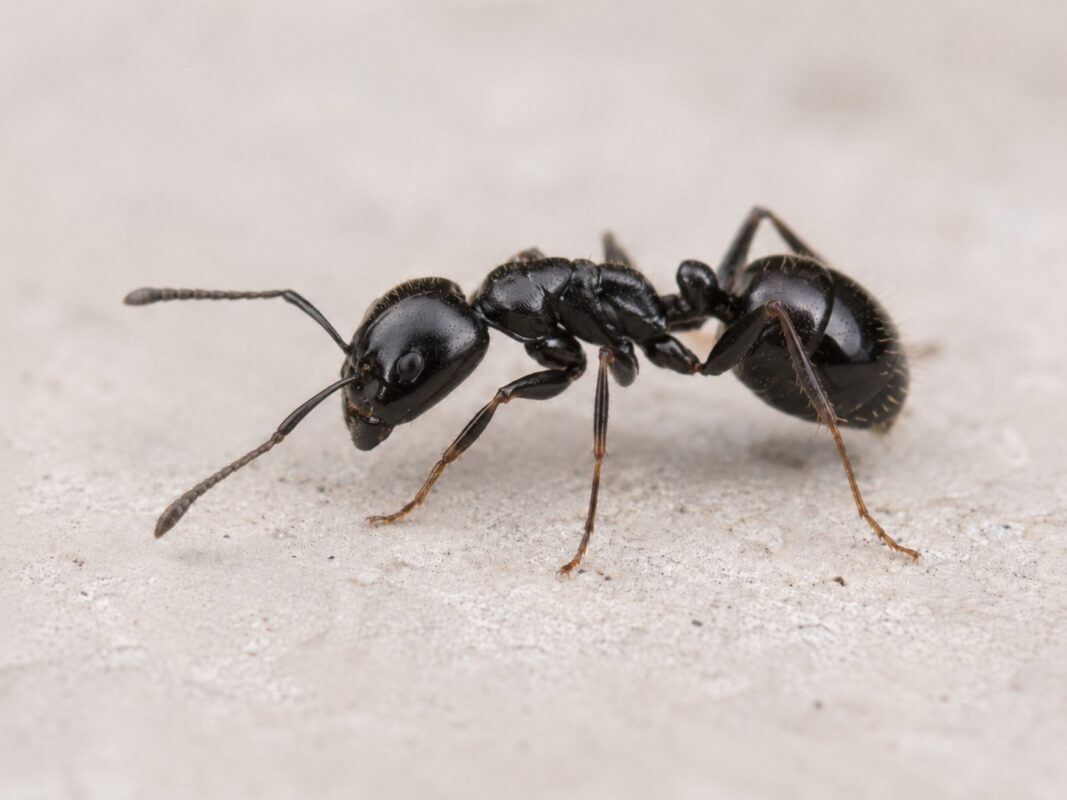
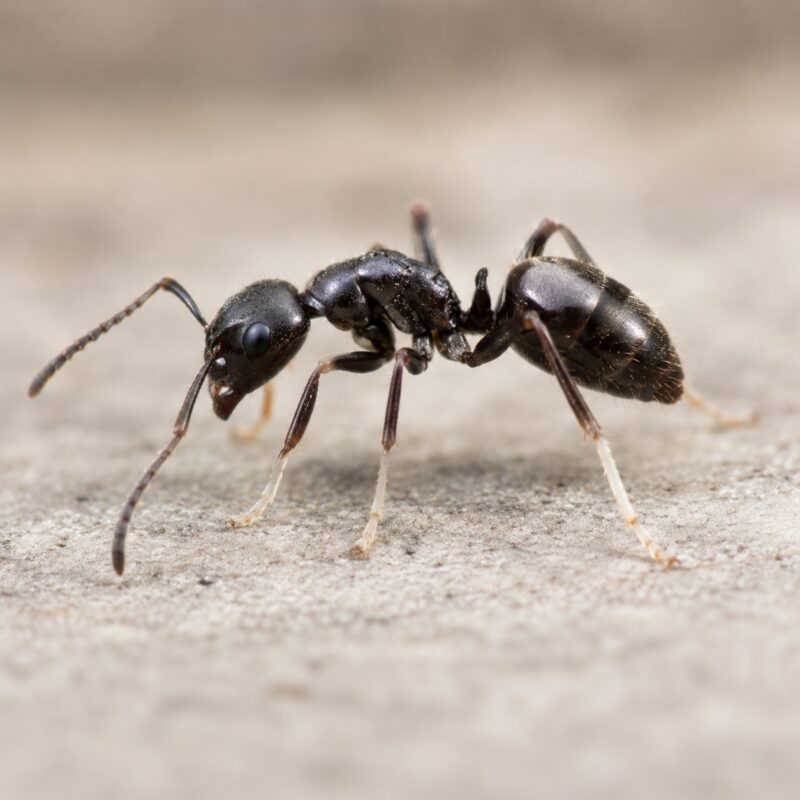
White-footed house ants are small dark ants, usually around 2.8 to 3.5 mm long. They can look similar to black house ants, although their pale feet are usually difficult to see without close inspection.
They may be noticed trailing indoors and outdoors, often in heavy trails along wall edges, ceiling cornices, internal walls, window frames, door frames, roof lines, external walls, fences and garden edges. Inside, activity may also be seen around kitchens, bathrooms, laundries or other areas where food or moisture is available.
White-footed house ants are often associated with vegetation, mulch, leaf litter, shrubs, pot plants and garden areas close to buildings. They may also be linked with aphids, mealybugs and other sap-feeding insects on nearby plants, as these can provide honeydew as a food source.
These ants can be persistent because nesting may occur in sheltered locations such as wall cavities, roof voids, ceiling areas, external vegetation, pot plants and other protected areas around the building. Activity may be more noticeable at night, especially where ants are moving between nesting sites and food or moisture sources.
Correct identification is useful because white-footed house ants can be persistent around roof lines, wall edges, vegetation and concealed nesting areas. They may not always respond to baiting in the same way as other common household ants, so treatment needs to be matched to the location and pattern of activity.
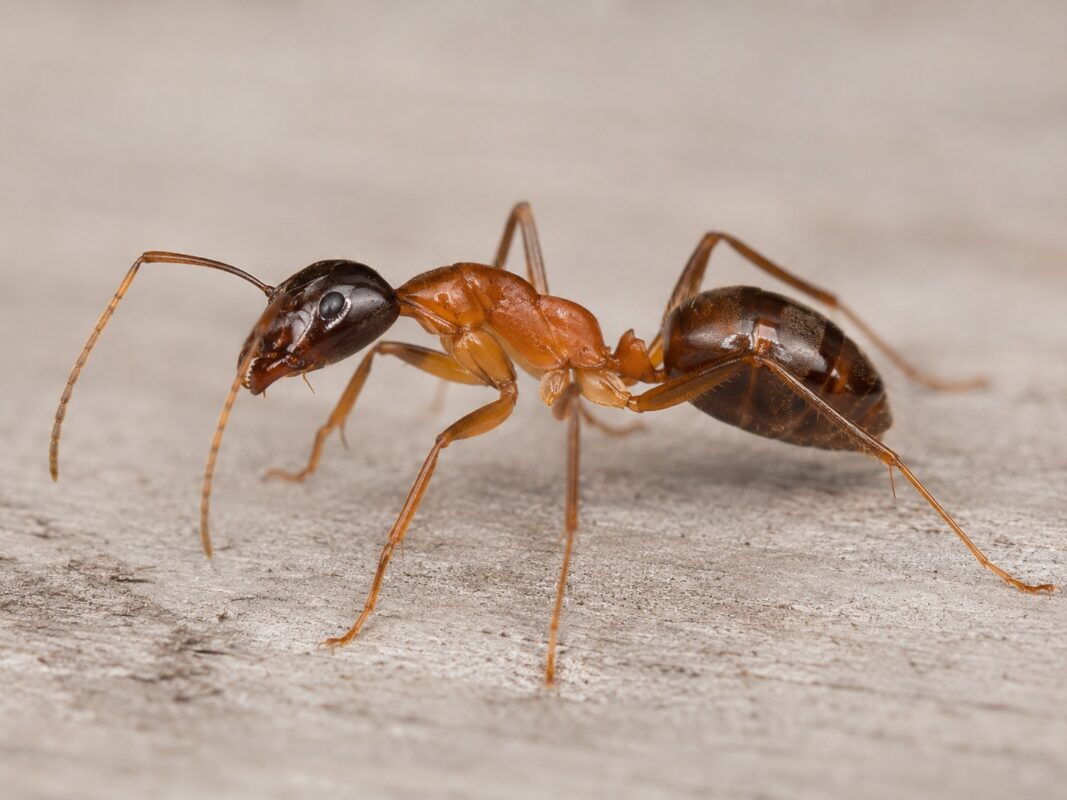
Carpenter ants are Camponotus species, a group of larger ants, some of which are commonly referred to as sugar ants in Australia. Size and colour can vary between species, but carpenter ants are often dark brown, black, reddish-brown or brown, and are generally much larger than the small indoor trailing ants commonly seen around kitchens and bathrooms.
While the name “carpenter ants” can sound concerning, Australian carpenter ants should not be confused with overseas species known for more destructive timber activity. They do not eat timber like termites. Where carpenter ants are associated with timber, they are usually excavating softened, damp or already decayed timber for nesting.
Unlike many small household ants, carpenter ants are often noticed indoors as scattered individual ants rather than heavy trails, although trails may still occur where ants are moving between nesting areas and food sources. Activity may be more noticeable at night.
Carpenter ants may be found around gardens, trees, roof areas, wall cavities, window frames, bathrooms, laundries, kitchens or other areas where moisture and sheltered nesting conditions are present. Existing sheltered voids may also be used for nesting. One common example is hollow-core internal doors, where gaps or separated door skins provide access to the internal honeycomb core.
These ants may also be attracted to sweet foods, insects, household food residues and other accessible food sources.
Their presence may indicate moisture, decay, timber deterioration or suitable nesting conditions rather than a termite-style timber attack.
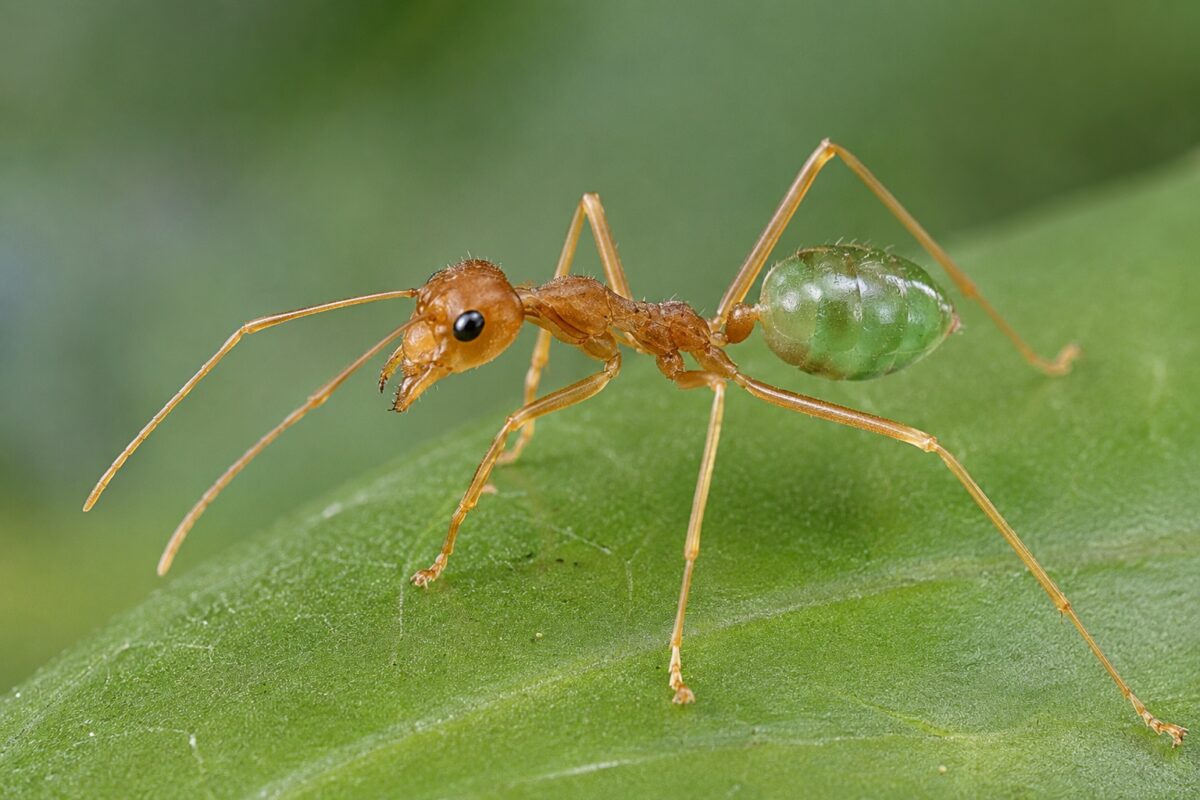
Green ants, also known as green tree ants or weaver ants, are common around Cairns properties, particularly around trees, shrubs, fences, garden areas and outdoor living spaces. They are usually more of an outdoor nuisance than a regular indoor pest, although they may occasionally enter buildings or become a problem where nests or trails are close to areas people regularly use.
Green ants can be beneficial to the Cairns environment because they actively prey on other insects and may help reduce some plant pests. Where they are not causing a nuisance or access issue, it is often better to leave them undisturbed rather than treat them unnecessarily.
They may be noticed around patios, clotheslines, pools, garden paths, entry points, sheds, fences and vegetation touching or overhanging the building. Their nests are often found in trees or shrubs, where leaves are pulled together and held with silk produced by the ant larvae. This leaf-weaving behaviour is where the name “weaver ant” comes from.
Green ants can bite when disturbed, and the bite can be mildly painful. They may also spray formic acid as a defence, which can add to the irritation. Where activity is heavy around walls, eaves or outdoor structures, small marks or staining may sometimes be noticed around active trails or nesting areas.
Correct identification helps avoid unnecessary treatment. Green ants are often best left alone unless they are nesting or trailing close to areas people regularly use, such as patios, clotheslines, pools, paths, sheds or building entry points.
Different ants can be attracted to different food and nesting conditions. Some ants are more interested in sweet foods, while others may prefer proteins, fats, oils, crumbs, pet food or other food residues. Moisture can also be a factor, especially around kitchens, bathrooms, laundries, leaking taps, pot plants and damp garden areas.
Ant activity may also be influenced by weather, rain, garden disturbance, changes in moisture levels and access to food or water. In some cases, ants may move indoors when outdoor conditions change or when a reliable food or moisture source is available inside.
Common contributing conditions can include food spills, crumbs, sticky residues, unsealed food, pet food left out for long periods, bins, recycling, moisture, gaps around entry points, vegetation close to the building, mulch, leaf litter, paving edges, pot plants and stored items near walls.
Practical housekeeping and maintenance can help reduce ant activity and support treatment. These steps may not solve an established ant problem on their own, but they can make the property less attractive to ants and help reduce repeat activity.
You can help reduce ant activity by wiping benches and food preparation areas, cleaning spills and sticky residues promptly, keeping food sealed where practical, avoiding dirty dishes being left out overnight, managing pet food and keeping bins clean with lids closed.
It may also help to reduce moisture where possible, repair obvious leaks or damp areas where suitable, trim vegetation away from walls where practical, reduce leaf litter and stored items around wall edges, and seal obvious gaps around entry points where appropriate.
Where ants are nesting outdoors or entering from surrounding areas, these steps are best seen as support measures rather than a complete control method.
Ant treatment is most effective when the approach is matched to the type of ant activity present. A treatment that works well for one ant species may not be suitable for another, especially where ants are nesting in concealed areas or trailing between indoor and outdoor locations.
Over-the-counter ant sprays may provide a short-term knockdown of visible ants, but they often do not address the nest or the source of the activity. With some ant species, repellent sprays can also disturb the colony and cause ants to move, split or appear in other areas, which may make the issue harder to control.
Pestco Pest Management assesses where the ants are active, how they are gaining access, likely nesting areas, food and moisture sources, and whether the issue is mainly indoors, outdoors or both. Treatment may include targeted application to trails, entry points and harbourage areas, suitable ant baits where appropriate, or professional-use non-repellent products that allow ants to continue moving through treated areas and transfer the treatment through the colony.
Results are not always immediate. Ant activity may reduce gradually depending on the species, nesting location, treatment method and whether ants are coming from external areas, wall cavities, roof voids, gardens or neighbouring properties.
The aim of professional ant treatment is to control current activity, target likely movement and nesting areas where practical, and provide advice to help reduce conditions that may allow ants to return.
If ants are becoming a regular issue around your home, rental property or business, Pestco Pest Management can provide practical ant control suited to your property and the level of activity present.
Contact Pestco Pest Management to arrange ant control in Cairns or discuss the areas where ants are being seen.
REQUEST ANT CONTROL VIEW GENERAL PEST CONTROL PRICES